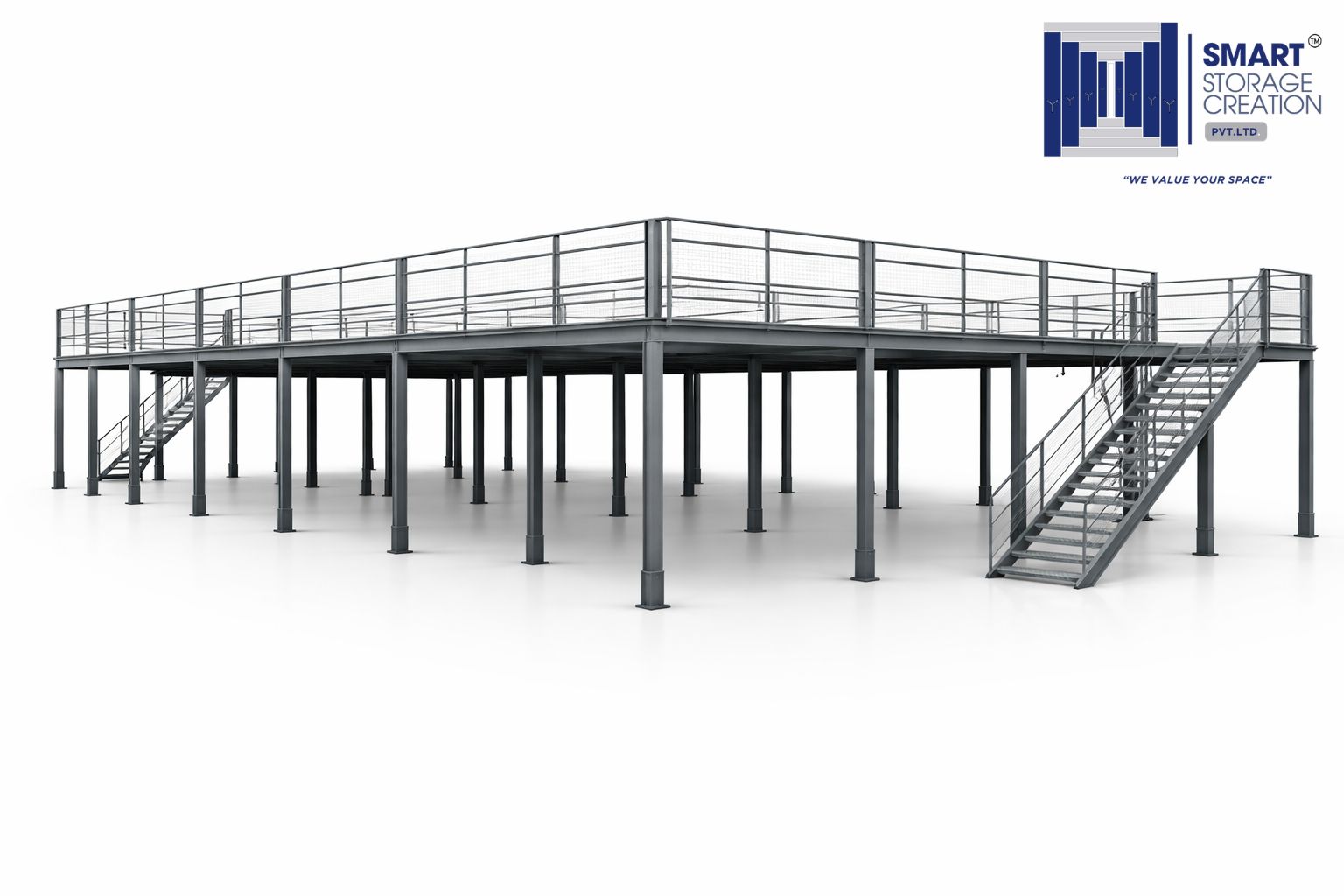
When a warehouse outgrows its footprint, the default reaction is often to start looking at a second unit or a bigger lease. That's a valid option — but it's rarely compared properly against the alternative: installing a mezzanine floor and using the vertical space already inside the building you have.
Quick Answer
A mezzanine floor is usually the lower-cost, faster option when your existing facility has spare ceiling height, since it avoids new rent, a new lease negotiation, and the operational disruption of splitting inventory across two sites. Renting additional space makes more sense when ceiling height is too low for a mezzanine, or when the space shortage is expected to be temporary.
What Renting Additional Space Actually Costs
- Ongoing rent or lease payments, indefinitely, not a one-time cost
- Deposit and lease negotiation overhead
- Operational cost of splitting inventory, staff, and logistics across two locations
- Additional transport time and cost moving stock between sites
- Exposure to future rent increases at renewal
What a Mezzanine Floor Actually Costs
- A one-time capital cost for structural steel, flooring, and safety infrastructure
- No ongoing rent — the space becomes yours to use for the life of the building
- Installation with minimal disruption to ongoing operations for most layouts
- No added transport time — inventory stays in one facility
Expert Insight
The break-even point depends on your local rent levels, but many businesses recover a mezzanine floor's installation cost within 12–24 months of avoided rent — and continue owning the extra space indefinitely afterward.
When Renting Additional Space Is the Better Choice
- Your existing ceiling height genuinely can't support a mezzanine level
- The extra space need is short-term or seasonal, not a permanent growth trend
- You need a different location entirely, closer to customers or transport links
When a Mezzanine Floor Is the Better Choice
- You have spare ceiling height in your current facility
- The growth in inventory or operations looks permanent, not temporary
- You want to avoid splitting operations, staff, or stock across two sites
- You want to own the additional capacity rather than pay for it indefinitely
What to Check Before Deciding
Ceiling Height and Column Spacing
A site assessment will confirm whether your existing facility can structurally support a mezzanine floor and how many levels are realistic.
Load Requirements
Storage mezzanines carrying palletised goods need heavier structural steel than one intended for light storage or workstations — this materially affects cost.
Growth Trajectory
If growth is expected to continue, a mezzanine floor is very often the better long-term investment since it's capacity you own rather than rent.
Mezzanine Floor Manufacturer in Mumbai and Across India
Smart Storage Creation designs, manufactures, and installs mezzanine floor systems — including multi-tier configurations — from our ISO 9001, CMMI Level 5 certified facility in Vasai, serving warehouses across Mumbai, Maharashtra, and Pan-India.
See our mezzanine floor systems and multi-tier mezzanine floors, read our mezzanine floor guide, or explore other options in how to increase warehouse storage capacity.
Frequently Asked Questions (FAQ)
Conclusion
Renting more space and installing a mezzanine floor solve the same problem in very different ways — one is an ongoing cost, the other is a one-time investment in space you already own.
For most businesses with genuine, ongoing growth and spare ceiling height, the mezzanine floor wins on cost within a couple of years and keeps operations in one site.
Smart Storage Creation will assess your facility honestly — including telling you if renting is actually the better option — before recommending a mezzanine installation.